
Will the factory send wedge anchors samples for pull-out testing?
- VIP-User
- 2026-07-26
- 21
Yes, the factory provides stainless steel wedge anchors samples for pull-out testing and technical verification. Customers can obtain 1 to 10 prototype or sample pieces to test mechanical properties, including tensile strength and pull-out resistance in solid concrete, ensuring the heavy-duty expansion anchors meet structural engineering standards prior to mass production.
Core Solutions & Key Takeaways
- Sampling and Prototyping: The factory supports prototype and sample orders ranging from 1 to 10 pieces, allowing engineering teams to perform physical validation before executing bulk orders.
- Material Grade Selection: Anchors are manufactured in either 304 Stainless Steel for general humid environments or 316 Stainless Steel for superior chemical and saltwater resistance.
- Substrate Specificity: These heavy-duty expansion anchors are engineered strictly for solid concrete, reinforced concrete, and grout-filled masonry. They are not recommended for brick, hollow block, drywall, or wood.
- Engineering Integration: Development teams can submit custom drawings, with the factory accepting 2D and 3D files in PDF, DWG, DXF, STEP, IGS, and STP formats.
Detailed Architectural/Principle Analysis
To secure structural attachments to concrete, wedge anchors rely on mechanical expansion principles. When the nut is tightened to the specified installation torque, the tapered mandrel drawn up through the expansion clip forces the clip to expand outwardly against the walls of the pre-drilled hole. This action creates high holding power through friction and mechanical interlock. Achieving precise mechanical tolerances is vital; therefore, ZheJiang Dream Industry Limited maintains a standard tolerance of ±0.1 mm on CNC precision machined parts, ensuring consistent expansion behavior during field installations.
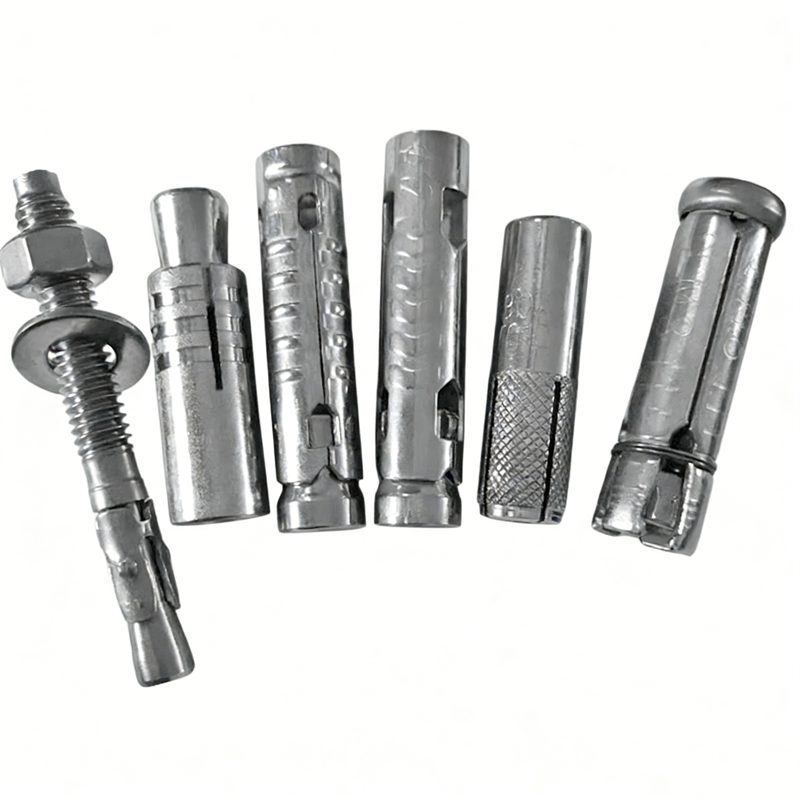
The selection between 304 and 316 stainless steel grades directly dictates the long-term integrity of the installation. While 304 stainless steel offers excellent corrosion resistance for general outdoor construction and HVAC systems, marine engineering and wastewater treatment environments demand 316 stainless steel due to its chloride and saltwater resistance. Mechanical testing of samples ensures that physical properties—including hardness, tensile strength, yield strength, and fatigue resistance—align with structural requirements under static, dynamic, or seismic load conditions.
Data/Solution Comparison
Evaluating the appropriate material grade and testing parameters ensures structural safety. The table below details the performance characteristics of the available stainless steel wedge anchors.
| Parameter / Feature | 304 Stainless Steel Wedge Anchors | 316 Stainless Steel Wedge Anchors |
|---|---|---|
| Material Standards | ASTM F593, ASTM A276, DIN 1.4301 | ASTM F593, ASTM A276, DIN 1.4401 / 1.4404 |
| Primary Environmental Resistance | Excellent corrosion and oxidation resistance in humid environments | Superior resistance to chlorides, saltwater, and harsh industrial chemicals |
| Typical Application Scenarios | Outdoor construction, fence installation, handrails, light poles, HVAC systems | Marine engineering, coastal projects, chemical plants, wastewater treatment, food processing |
| Applicable Base Materials | Solid concrete, reinforced concrete, grout-filled masonry | Solid concrete, reinforced concrete, grout-filled masonry |
| Standard Tolerances | ±0.1 mm | ±0.1 mm |
Frequently Asked Questions (FAQ)
What sizes and dimensional ranges are available for the wedge anchor samples?
Wedge anchors are available in metric diameters ranging from M6 to M24 and imperial diameters from 1/4” to 1”. Lengths range from 40 mm to 200 mm, with custom sizes and thread lengths (full or partial thread) manufactured to order based on project requirements.
How is the correct drill hole diameter determined for installation?
The drill hole diameter must match the anchor diameter exactly. For example, an M10 anchor requires a 10 mm drill hole. Following drilling, the hole must be cleaned thoroughly, the anchor inserted, and the nut tightened to complete the expansion process.
What testing and quality standards do these fasteners comply with?
All production lots undergo a comprehensive quality inspection process, including full dimensional inspection, First Article Inspection (FAI), and material certification. The manufacturing system is ISO 9001 certified, and products are compliant with RoHS standards.
About Us
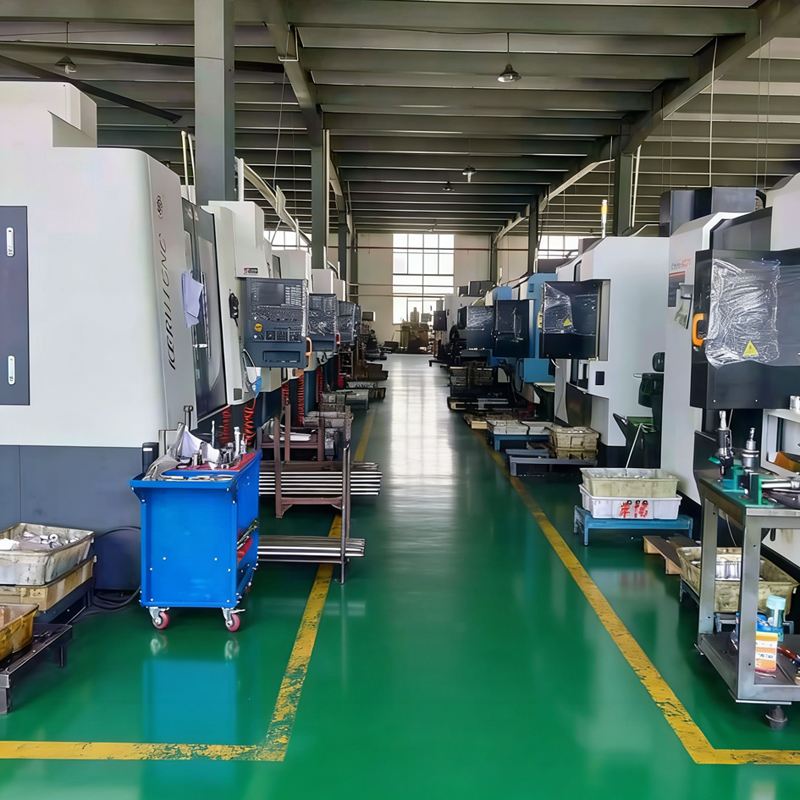
ZheJiang Dream Industry Limited, established in 2008, brings over 20 years of precision manufacturing experience to the production of high-performance industrial hardware and custom fasteners. Operating from a 2500sqm factory facility with 34 employees, the company integrates advanced manufacturing with custom design, supporting a 65% export ratio across Europe, South America, North America, the Middle East, and Southeast Asia. The company maintains an ISO 9001 certified manufacturing system (Certificate No. ZT-Q-24120011S), ensuring precision machining with tolerances held up to ±0.03mm on critical dimensions.
Final Conclusion & Recommendations
Acquiring physical samples for pull-out testing is a standard engineering practice that mitigates risks in structural fastening. Sourcing directly from the manufacturer guarantees material traceability and precise tolerances required for heavy-duty concrete installations. Under the factory direct supply business model, both prototype sample runs and mass production quantities are fully supported with quick-turn lead times of 7 to 25 days. For detailed technical solutions or support, please reach out to us via 86-15868979792.
Lastest
-
What key quality control documents should I request when auditing a potential CNC components factory?
2026-07-26 -
How long does it usually take a manufacturer to produce and ship custom CNC component prototypes?
2026-07-26 -
How do I choose between 3-axis and 5-axis CNC components for high-precision aerospace parts?
2026-07-26 -
Are there any emerging materials that could replace traditional steel CNC components to reduce weight?
2026-07-26 -
Can you explain the process of adding a custom logo and specific dimensions to a cast iron handwheel?
2026-07-26
SUBSCRIBE
INQUIRY