
How do I choose the right tolerance level for custom CNC components?
- VIP-User
- 2026-07-15
- 37
Choosing the right tolerance level for custom CNC components requires balancing application demands with manufacturing costs. Standard tolerances of ±0.1 mm suffice for general industrial machinery and structural parts, whereas high-precision applications in aerospace, medical devices, or valve systems demand precision tolerances up to ±0.03 mm to ensure proper fit and performance.
Core Solutions & Key Takeaways
- Align tolerances with specific application environments, such as Marine and Offshore Equipment, Food Processing Equipment, or Valve and Pipeline Systems, where precise fluid control is required.
- Evaluate material machinability; metals like Stainless Steel (304, 316) or Aluminum (6061, 7075) hold tight tolerances differently compared to engineering plastics like POM or PTFE.
- Standardize on standard tolerances (±0.1 mm) for non-critical dimensions to optimize production cycles, utilizing precision tolerances (±0.03 mm) only for critical mating interfaces.
- Select manufacturing partners certified under standards like ISO 9001 to guarantee dimensional consistency and quality compliance during bulk production.

Detailed Architectural/Principle Analysis
To select the optimal tolerance, engineers must analyze the functional requirements of the custom CNC components. For instance, in an Adjustable Clamping Knob Project for CNC Machines, high mechanical strength and precise alignment are necessary to prevent slipping under load. Implementing a standard tolerance of ±0.1 mm for the overall knob dimensions keeps costs low, while a precision tolerance of ±0.03 mm is reserved for the threaded insert to ensure tight locking.
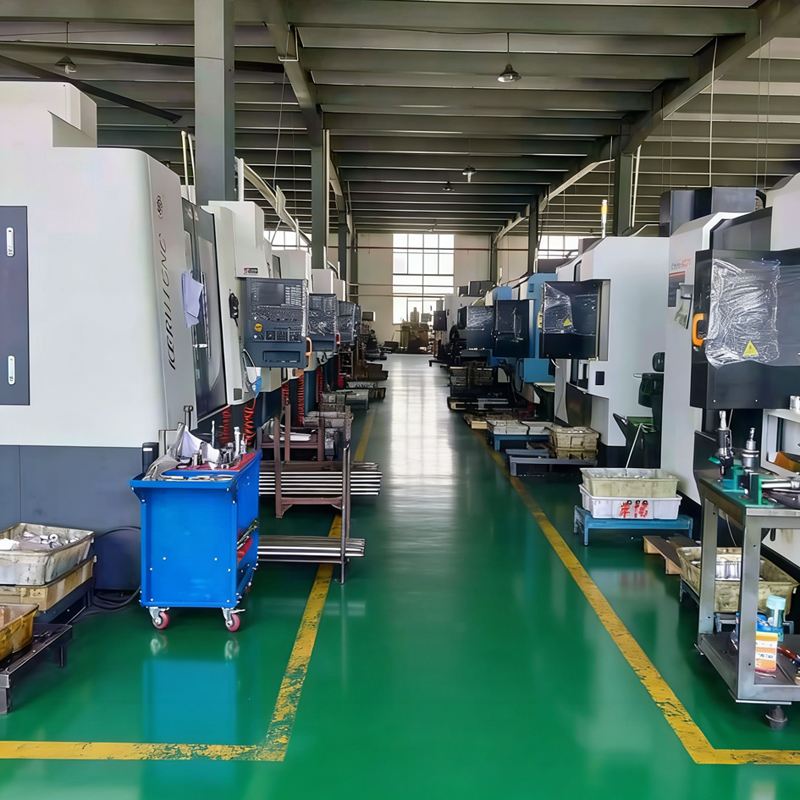
Material characteristics also dictate achievable tolerances. Harder metals like Stainless Steel 316L and Carbon Steel 1045 offer high dimensional stability, allowing for consistent precision machining. Conversely, engineering plastics like POM or Teflon expand and contract with temperature shifts, making ultra-tight tolerances harder to maintain. Partnering with a manufacturer like ZheJiang Dream Industry Limited, which utilizes highly automated CNC machining centers, ensures that tight tolerances are met reliably. Their manufacturing system features 23 in-process quality inspection steps, maintaining a low defect rate of under 0.3%.
Data/Solution Comparison
| Tolerance Level | Typical Tolerance Range | Key Materials | Typical Application Scenarios |
|---|---|---|---|
| Standard Tolerance | ±0.1 mm | Carbon Steel, Brass, POM, Aluminum | Structural brackets, external covers, packaging machinery rails |
| Precision Tolerance | ±0.03 mm | Stainless Steel (304/316), Alloy Steel, PEEK | Valve systems, marine equipment control, CNC positioning fixtures |
| High Precision | Under ±0.01 mm | Specialized Alloys, Aerospace Aluminum | Semiconductor equipment, medical implant devices, aerospace sensors |
Frequently Asked Questions (FAQ)
How does material selection affect CNC component tolerances?
Materials possess unique mechanical properties like thermal expansion, hardness, and machinability. Metals such as Aluminum and Brass allow for highly stable, tight-tolerance machining (±0.03 mm), whereas plastics like PTFE or Nylon exhibit higher elasticity and thermal expansion, often requiring broader standard tolerances of ±0.1 mm to avoid warping during production.
Why does specifying overly tight tolerances increase CNC production costs?
Tighter tolerances require specialized tooling, slower feed rates, advanced calibration, and rigorous quality inspection procedures. This increases cycle times and machine wear, whereas using standard tolerances for non-mating dimensions streamlines the manufacturing cycle and lowers overall component costs.
What quality inspection methods verify that custom CNC parts meet tolerance specifications?
Quality-focused manufacturers deploy several verification steps. These include First Article Inspection (FAI), full dimensional inspection using coordinate measuring machines (CMM), and in-process testing. Under certified ISO 9001 systems, automated and manual checks verify dimensional accuracy to match the specified 2D/3D technical drawings (such as STEP, DWG, or PDF).
Final Conclusion & Recommendations
Choosing the correct tolerance level for custom CNC components involves balancing performance needs with realistic manufacturing budgets. Applying a standard tolerance of ±0.1 mm for non-critical features while reserving ±0.03 mm precision tolerances for critical alignment points maximizes efficiency. Collaborating with an experienced partner that offers versatile business models, including OEM manufacturing, custom CNC machining services, and flexible small-batch options, ensures tailored production solutions. For detailed technical solutions or support, please reach out to us via 86-15868979792.
About Us
ZheJiang Dream Industry Limited delivers high-quality precision manufacturing services with over 20 years of experience. Established in 2008, the company operates a modern 2500sqm factory facility and employs a dedicated team of 34 professionals specializing in custom CNC turning, milling, and assembly. Holding ISO certification (ZT-Q-24120011S) and multiple patents, the manufacturer provides robust OEM and ODM solutions to global clients across the valve, marine, food processing, and automation industries.
Lastest
-
What key quality control documents should I request when auditing a potential CNC components factory?
2026-07-15 -
How long does it usually take a manufacturer to produce and ship custom CNC component prototypes?
2026-07-15 -
How do I choose between 3-axis and 5-axis CNC components for high-precision aerospace parts?
2026-07-15 -
Are there any emerging materials that could replace traditional steel CNC components to reduce weight?
2026-07-15 -
Can you explain the process of adding a custom logo and specific dimensions to a cast iron handwheel?
2026-07-15
SUBSCRIBE
INQUIRY