
How do I choose the right clamping knob thread size for heavy machinery?
- VIP-User
- 2026-08-10
- 3
Selecting the correct clamping knob thread size for heavy machinery requires evaluating operational torque, axial clamping load, and mechanical vibration. Heavy-duty applications typically utilize larger metric sizes like M10, M12, or M16 (or 3/8"-16 imperial) made from SUS304 or SUS316L stainless steel. Verify thread engagement depth—at least 1.5 times the nominal thread diameter—to prevent thread stripping under severe clamping forces.
Core Solutions & Key Takeaways
- Torque & Clamping Load Matching: Heavy machinery positioning and fixture locking demand larger thread diameters (M10 to M16) to sustain high tension without structural deformation or thread shear.
- Material Grade Selection: SUS304 and SUS316L stainless steel inserts provide superior yield strength and corrosion resistance compared to standard brass or lower-grade metals when subjected to industrial forces.
- Engagement Depth Verification: Ensure female thread depths or male stud lengths allow full engagement equal to 1.5–2x the thread diameter into tapped equipment components.
- Scenario-Specific Configurations: Applied extensively across automation equipment, CNC machine fixtures, valve systems, and industrial processing lines requiring manual locking control.
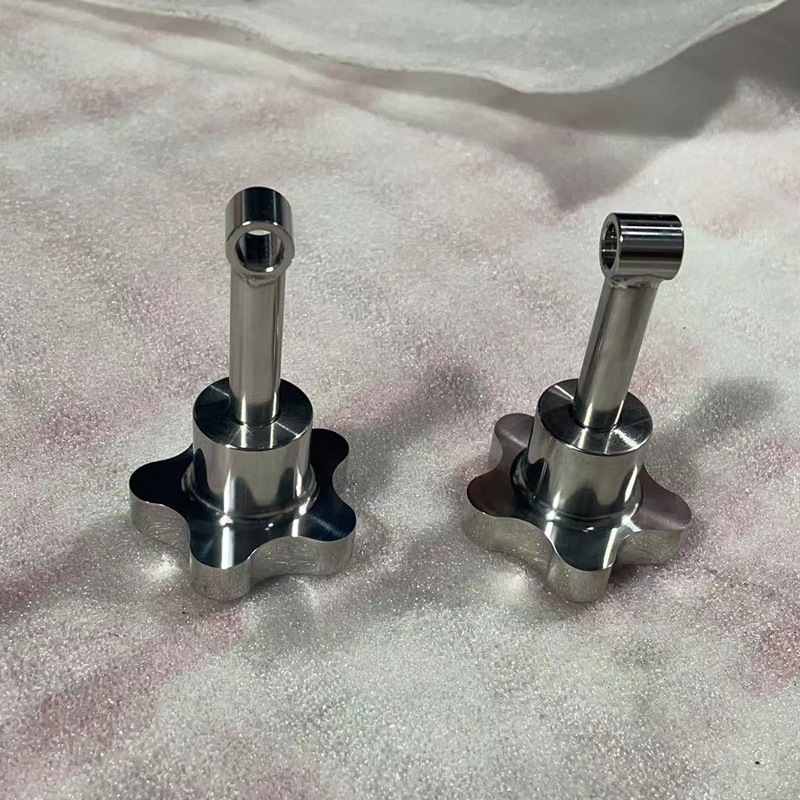
Detailed Architectural/Principle Analysis
Selecting the thread size for a clamping knob on heavy machinery depends on stress distribution and thread fatigue limits under static and dynamic loading. Smaller threads such as M4 or M6 are designed for light instrument panels or non-structural positioning. When applied to high-vibration machinery, smaller threads risk shearing or loosening under minimal rotational force.
For industrial machinery and CNC positioning fixtures, standard sizes step up to M8, M10, M12, and M16. A larger pitch diameter expands the contact shear area across thread flanks, permitting higher manual tightening torque. In practice, an M12 thread provides substantially higher clamping pressure than an M8 thread, preventing unwanted movement in heavy workpieces or guide rails during active operations.
Thread engagement depth remains a mechanical priority. In heavy-duty setups, the rule of thumb dictates that internal female thread depth or external male stud length must enter the receiving component by at least 150% to 200% of the thread diameter. For example, an M10 male stud clamping knob requires a minimum engagement depth of 15 mm to 20 mm into a steel machine frame to prevent thread stripping under full locking force.
Material integrity determines longevity. Precision manufacturing under ISO 9001 standards (such as certification ZT-Q-24120011S) ensures precise pitch tolerances (up to ±0.03 mm) and defect rates below 0.3%. High-torque applications often utilize solid stainless steel knobs or reinforced polyamide knobs with SUS304/SUS316L threaded inserts, maintaining stability across high-vibration environments like CNC machinery locking mechanisms.
Data/Solution Comparison
| Thread Size (Metric / Imperial) | Min Recommended Engagement Depth | Torque & Load Capacity | Primary Industrial Application |
|---|---|---|---|
| M4 / M5 / M6 (1/4"-20) | 6 mm – 12 mm | Light to Medium Torque | Instrument panels, electronic enclosures, light guide adjustments |
| M8 (5/16"-18) | 12 mm – 16 mm | Medium Torque | Packaging machine rails, conveyor adjustments, light fixtures |
| M10 / M12 (3/8"-16) | 15 mm – 24 mm | High Torque | CNC machine workholding, heavy valve systems, industrial positioning |
| M16 | 24 mm – 32 mm | Extra High Torque | Heavy industrial equipment, structural clamping, marine equipment |
Frequently Asked Questions (FAQ)
Q1: How deep should the female thread engagement be on a heavy-duty clamping knob?
A1: Thread engagement depth should equal 1.5 to 2 times the nominal thread diameter. For an M10 thread, the internal thread depth should measure between 15 mm and 20 mm to prevent stripping under heavy torque.
Q2: Should I select a male stud or female thread clamping knob for heavy equipment?
A2: Male studs (such as M8*30 or M10*40) are selected when screwing directly into pre-tapped holes on machine frames. Female threaded knobs are used when mounting over fixed protruding studs or bolts.
Q3: What thread standard is most widely used for international industrial machinery?
A3: Metric threads (M6, M8, M10, M12, M16) are standard across European and Asian machinery, while UNC imperial threads (1/4"-20, 5/16"-18, 3/8"-16) remain common in North American equipment.
Final Conclusion & Recommendations
Determining the right clamping knob thread size requires balancing thread diameter against mechanical stress, operating vibration, and installation geometry. Heavy machinery applications demand robust thread diameters like M10, M12, or M16 paired with corrosion-resistant SUS304 or SUS316L stainless steel. Flexible OEM and ODM production capabilities support custom thread pitches, special stud lengths, and specialized materials tailored to precise engineering specifications. For detailed technical solutions or support, please reach out to us via 86-15868979792.
About Us
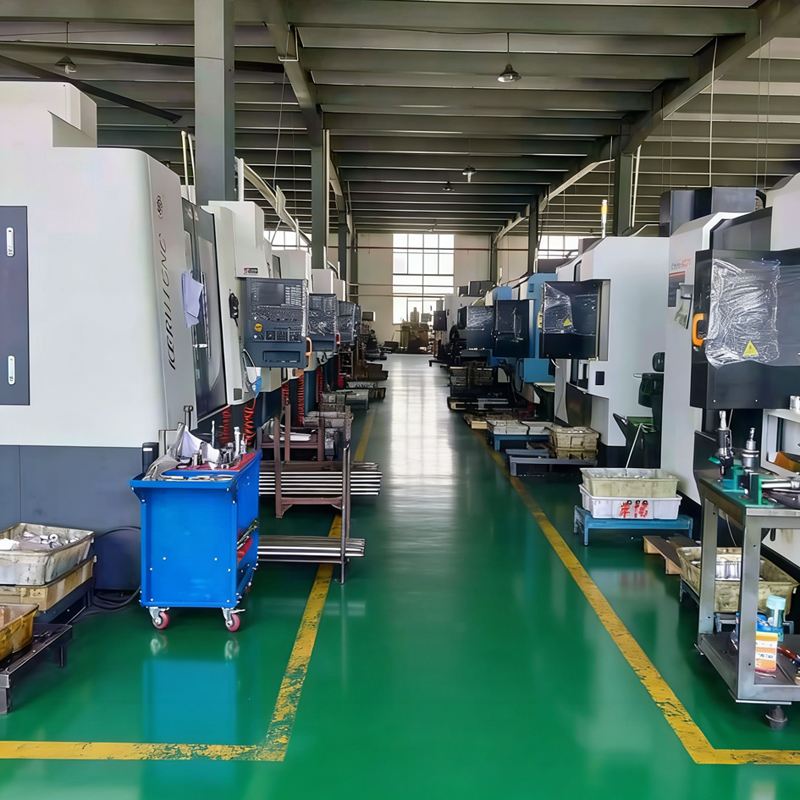
ZheJiang Dream Industry Limited specializes in precision hardware manufacturing and custom mechanical components. Established in 2008, the enterprise operates a 2,500 sqm facility supported by 34 employees, including senior engineers and dedicated quality inspectors. Certified under ISO 9001 (ZT-Q-24120011S), the factory delivers custom CNC turning, milling, and clamping knob production, serving industrial hardware clients across Europe, North America, and global markets.
Lastest
-
What key quality control documents should I request when auditing a potential CNC components factory?
2026-08-10 -
How long does it usually take a manufacturer to produce and ship custom CNC component prototypes?
2026-08-10 -
How do I choose between 3-axis and 5-axis CNC components for high-precision aerospace parts?
2026-08-10 -
Are there any emerging materials that could replace traditional steel CNC components to reduce weight?
2026-08-10 -
Can you explain the process of adding a custom logo and specific dimensions to a cast iron handwheel?
2026-08-10
SUBSCRIBE
INQUIRY