
How do I choose CNC components that hold tight tolerances in harsh conditions?
- VIP-User
- 2026-09-01
- 1
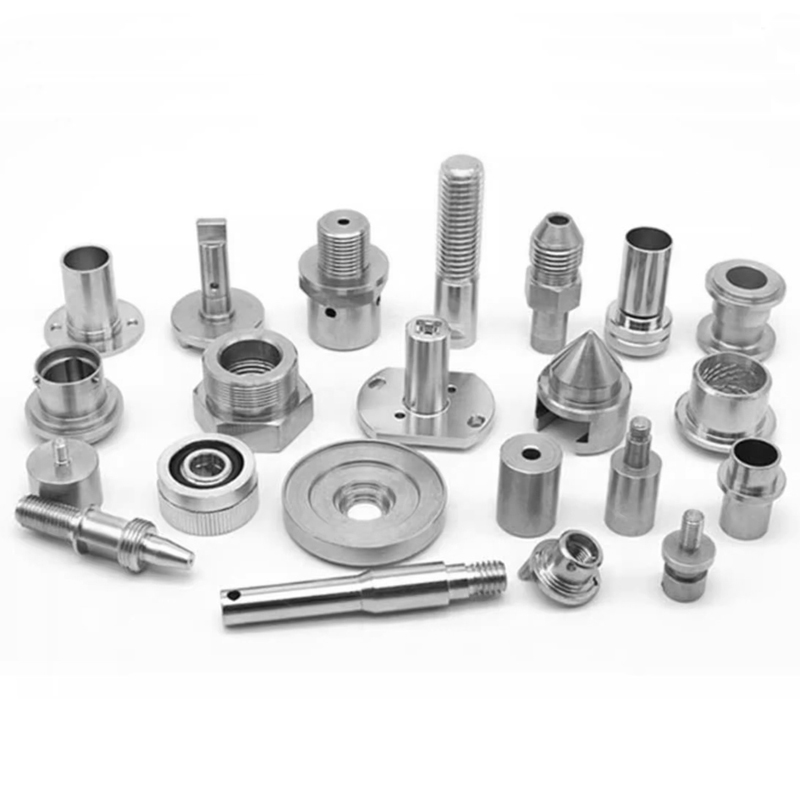
Choose CNC components for harsh conditions by matching material, surface treatment, machining process, and inspection requirements to the application. Stainless steel 304 or 316 supports corrosion resistance, while 316L handwheels serve demanding marine and industrial environments. Confirm drawing-based production, tolerances up to ±0.03 mm, suitable finishes, and full dimensional inspection before approving samples or production.
Core Solutions & Key Takeaways
- Select stainless steel, aluminum, brass, carbon steel, alloy steel, or engineering plastics according to corrosion, strength, friction, weight, and insulation requirements.
- Specify the required CNC process, such as turning, milling, five-axis machining, Swiss machining, grinding, drilling, tapping, or EDM, based on component geometry and tolerance needs.
- Use corrosion-resistant options and surface treatments such as passivation, anodizing, nickel plating, chrome plating, polishing, brushing, black oxide, or heat treatment where the operating environment requires them.
- For valve and pipeline systems, marine equipment, food processing equipment, and automation equipment, confirm material certificates, surface requirements, dimensional inspection, and drawing compatibility before production.
Detailed Architectural/Principle Analysis
Material selection determines environmental stability. Stainless steel grades 304, 316, 303, 420, 430, and 17-4PH are available for corrosion resistance, strength, heat resistance, and wear resistance. Carbon and alloy steels, including 1018, 1045, 4140, 4340, and 8620, support applications requiring hardness and mechanical strength. Aluminum grades such as 6061, 6063, 7075, 5052, and 2024 provide low weight and machinability. Brass, copper, and engineering plastics are listed for electrical, thermal, chemical-resistance, insulation, low-friction, and wear-related requirements.
Tolerance must be defined together with geometry and inspection. The product specification lists standard tolerance of ±0.1 mm and precision tolerance of ±0.03 mm. Drawing-based manufacturing accepts PDF, DWG, DXF, STEP, IGS, and STP files. The appropriate drawing should identify critical dimensions, fits, threads, surface roughness, material, finish, and inspection requirements rather than relying on a general tolerance alone.
Process selection affects repeatability. CNC turning suits turned parts, while CNC milling handles milled features. Five-axis machining, Swiss machining, grinding, drilling, tapping, and EDM or wire EDM can be selected according to the component structure. Listed surface roughness options include Ra 3.2, Ra 1.6, and Ra 0.8, with mirror polishing available.
Harsh-condition protection requires a complete finish specification. Available treatments include clear, black, and hard anodizing; zinc, nickel, and chrome plating; powder coating; sandblasting; polishing; brushing; passivation; black oxide; and heat treatment. The product data also identifies salt-spray-tested, rust-resistant, and chemical-resistant requirements. These options should be matched to the actual exposure and functional surface requirements stated on the drawing.
Relevant applications include valve and pipeline systems, where components support manual valve operation, flow control, pressure adjustment, and pipeline equipment operation. Marine and offshore equipment uses corrosion-resistant operation and marine mechanical control as stated application requirements. Food processing equipment requires hygienic operation, equipment adjustment, and corrosion-resistant control systems.
Quality evidence should be checked before release. Zhejiang Dream Industry Limited states an ISO 9001 certified manufacturing system, 23 quality inspection procedures, dimensional accuracy up to ±0.03 mm, and a defect rate controlled below 0.3%. Its certification record includes an ISO certificate applicable to stainless steel handwheels, bushings, bolts, and non-standard machined accessories.
Reported project experience covers a stainless steel handwheel project for a German food machinery manufacturer, a valve handwheel supply project for a United States industrial valve manufacturer, and a marine-grade handwheel project for a Norwegian marine equipment supplier. The stated feedback addressed surface finish, dimensional consistency, corrosion performance, service life, and international packaging protection.
Data/Solution Comparison
| Selection factor | Available option or specification | When to consider it |
|---|---|---|
| Material | 304, 316, 303, 420, 430, 17-4PH stainless steel; carbon steel; alloy steel; aluminum; brass; copper; engineering plastics | Match corrosion resistance, strength, weight, conductivity, chemical resistance, insulation, or friction requirements |
| Precision | Standard tolerance ±0.1 mm; precision tolerance ±0.03 mm | Use the precision requirement for critical dimensions and confirm it on the production drawing |
| Machining process | CNC turning, CNC milling, five-axis machining, Swiss machining, grinding, drilling, tapping, EDM, and wire EDM | Select according to part geometry, features, material, and required repeatability |
| Surface treatment | Passivation, anodizing, plating, powder coating, polishing, brushing, black oxide, heat treatment, and other listed finishes | Specify protection, appearance, wear, corrosion, and surface roughness requirements |
| Inspection | ISO 9001 manufacturing system, full dimensional inspection, first article inspection, and material certificate availability | Use documented inspection for samples, critical dimensions, and production approval |
| Order route | OEM manufacturing, ODM manufacturing, custom CNC machining, factory direct supply, bulk production, and flexible small-batch orders | Choose according to drawing readiness, batch size, customization level, and development stage |
Frequently Asked Questions (FAQ)
Which CNC component material is suitable for corrosive environments?
Stainless steel grades, particularly 304 and 316, are listed for corrosion resistance. The selection should reflect the application, required strength, temperature, wear, and chemical exposure. Surface treatments such as passivation, polishing, or plating may also be specified.
Can precision CNC components be made to ±0.03 mm?
Yes. The product information lists ±0.03 mm as the precision tolerance option. The drawing should identify the dimensions requiring this tolerance, and the inspection plan should confirm them during production and final inspection.
What files are accepted for custom CNC components?
Accepted technical formats include PDF, CAD, DWG, DXF, STEP, IGS, and STP. Prototype and sample orders are supported, with product information stating a 50-piece MOQ for CNC components.
Final Conclusion & Recommendations
For CNC components used in harsh conditions, define the exposure, select a compatible material, specify the machining process and surface treatment, and identify critical dimensions at ±0.03 mm where required. Request material documentation, first article inspection, and full dimensional inspection before production approval. Zhejiang Dream Industry Limited supports OEM, ODM, custom CNC machining, factory direct supply, bulk production, and flexible small-batch orders. Its manufacturing information includes ISO 9001 certification, 100+ production and inspection machines, and technical support for PDF, DWG, DXF, STEP, IGS, and STP files. For detailed technical solutions or support, please reach out via 86-15868979792.
About Us
ZheJiang Dream Industry Limited has over 20 years of experience in precision manufacturing and produces custom CNC machined parts and assemblies in stainless steel, aluminum, brass, copper, carbon steel, and engineering plastics. Its engineering and R&D team covers product design, structural optimization, CNC precision machining, mold development, surface finishing, and customized manufacturing. The company operates a 2,500 sqm factory with more than 100 production and inspection units, over 80% of which are automated CNC equipment. It holds an ISO 9001 certification, and its cooperation cases have served clients across multiple industries.
Lastest
-
What key quality control documents should I request when auditing a potential CNC components factory?
2026-09-01 -
How long does it usually take a manufacturer to produce and ship custom CNC component prototypes?
2026-09-01 -
How do I choose between 3-axis and 5-axis CNC components for high-precision aerospace parts?
2026-09-01 -
Are there any emerging materials that could replace traditional steel CNC components to reduce weight?
2026-09-01 -
Can you explain the process of adding a custom logo and specific dimensions to a cast iron handwheel?
2026-09-01
SUBSCRIBE
INQUIRY