
How can I choose the right coupling size and material for harsh operating conditions?
- VIP-User
- 2026-08-24
- 2
Choose coupling size by matching bore diameter, torque capacity, rotational speed, shaft tolerance, misalignment, and installation method to the equipment. Choose aluminum alloy for lightweight automation and servo systems, stainless steel for corrosion, hygiene, or marine exposure, and carbon or alloy steel for high torque and heavy machinery. Confirm temperature, chemical, oil, dust, and vibration requirements before specifying the final coupling.
Core Solutions & Key Takeaways
- Size the coupling around the required bore, outer diameter, length, torque capacity, speed, and shaft tolerance. The product range supports metric bores from 3 mm to 50 mm, imperial bores from 1/8 inch to 1 inch, outer diameters from 14 mm to 200 mm, and lengths from 20 mm to 300 mm.
- Select a flexible coupling when the system requires radial, angular, or axial misalignment compensation, vibration damping, shock absorption, or noise reduction. Select a rigid coupling when accurate shaft alignment, high torque transmission, and zero backlash are required.
- Use stainless steel for corrosion-resistant, hygienic, marine, chemical, food, or medical equipment. Aluminum alloy supports lightweight servo, stepper motor, and automation applications, while carbon steel or alloy steel supports heavy machinery, pumps, compressors, and gearboxes.
- For valve and pipeline systems, food processing equipment, marine equipment, packaging machinery, or power transmission systems, confirm the operating environment and coupling performance requirements together rather than selecting by bore size alone.
Detailed Architectural/Principle Analysis
Coupling selection begins with the shaft interface. Match the bore diameter to the connected shafts and verify the required shaft tolerance, including H7, H8, or a customized tolerance. Clamp, set screw, keyway, and split hub designs provide different installation arrangements. Single split clamp, double split clamp, and set screw locking are listed mounting options.
Torque and speed define the mechanical load range. The listed torque capacity ranges from 0.5 Nm to 50,000 Nm, depending on the model. Maximum speed options include 3,000 RPM and 10,000 RPM, with high-speed customization available. Servo systems and precision motion control may require zero or low backlash, while low-inertia designs support high-speed systems and precision automation.
Flexible couplings, including jaw, Oldham, grid, bellows, disc, elastomer, and universal joint types, are specified for misalignment compensation and vibration control. The listed compensation ranges are radial misalignment of plus or minus 0.1 mm to plus or minus 2 mm, angular misalignment of 1 degree to 5 degrees, and axial misalignment of plus or minus 0.2 mm to plus or minus 5 mm. Rigid sleeve, clamp, and flange couplings are intended for accurately aligned shafts.
Material selection should follow the operating environment. Aluminum alloy grades 6061 and 7075 provide lightweight construction, corrosion resistance, machinability, and a high strength-to-weight ratio. Stainless steel grades SUS303, SUS304, and SUS316 provide corrosion resistance, strength, wear resistance, and a hygienic surface. Carbon steel and alloy steel options such as 45# steel, 40Cr, and 4140 provide high torque capacity, hardness, durability, and cost efficiency. Cast iron, ductile iron, elastomer, polyurethane, and rubber are also listed for applications requiring rigidity, vibration resistance, wear resistance, shock absorption, or elastic compensation.
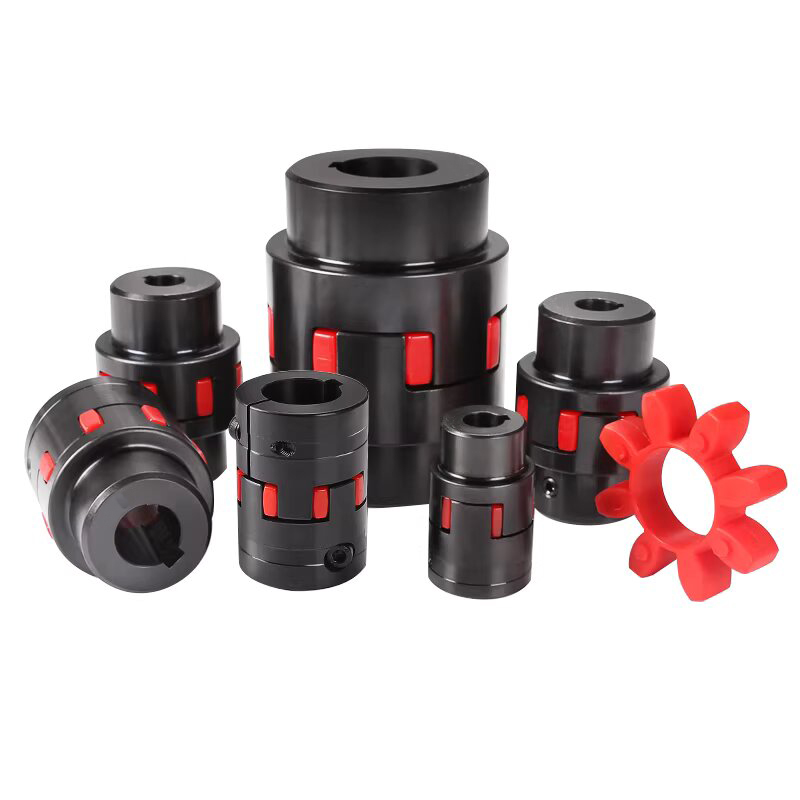
Harsh conditions require checks beyond material strength. The listed working range is -30 C to 120 C, with high-temperature customization available. Environmental resistance options include oil, dust, corrosion, and chemical resistance. Stainless steel is listed for food machinery, medical equipment, marine equipment, and chemical equipment, while elastomer or polyurethane components are listed for motor drives, pumps, and blowers where shock absorption and noise reduction are required.
Surface treatment can further align the coupling with the application. Aluminum options include anodizing, hard anodizing, and sandblasting. Steel options include black oxide, zinc plating, nickel plating, and chrome plating. Stainless steel options include passivation, polishing, and electropolishing.
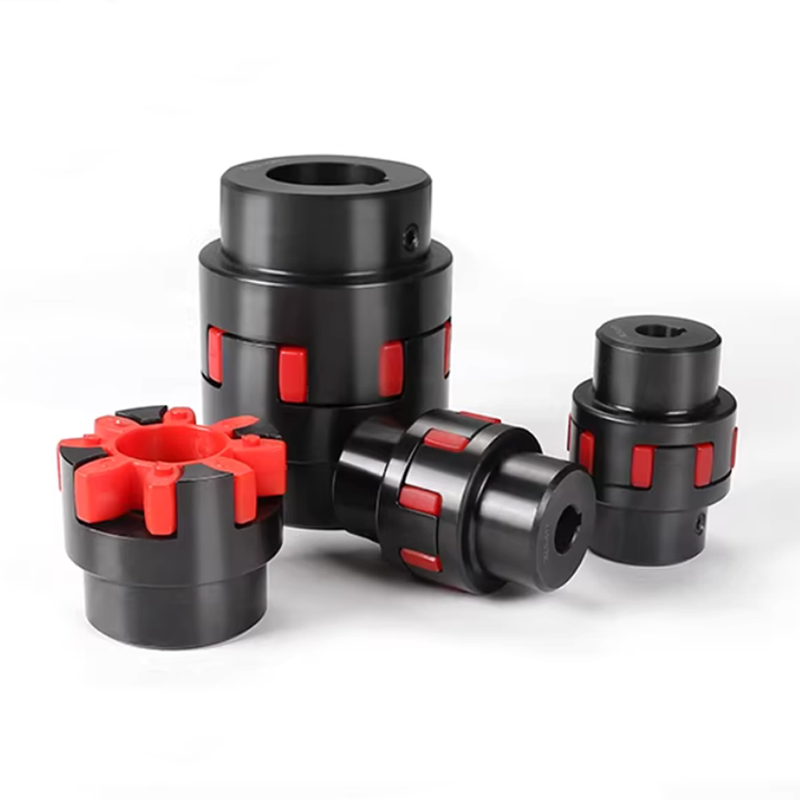
Quality documentation listed for the coupling includes ISO 9001 certification, full dimensional inspection, First Article Inspection, material certificates, RoHS compliance, REACH compliance, and an available patent-protected design. A coupling supply case for an industrial valve manufacturer in the United States involved valve, water treatment, and pipeline control systems; the reported requirements included dimensional consistency, harsh-environment performance, and protected international packaging.
Data/Solution Comparison
| Selection Area | Recommended Direction | Relevant Product Data |
|---|---|---|
| Lightweight motion control | Aluminum alloy flexible coupling | 6061 or 7075; servo motors, stepper motors, automation systems |
| Corrosive or hygienic environment | Stainless steel coupling | SUS303, SUS304, or SUS316; food, medical, marine, or chemical equipment |
| High torque or heavy machinery | Carbon steel, alloy steel, cast iron, or ductile iron coupling | 45# steel, 40Cr, 4140, or iron construction; pumps, compressors, gearboxes, and heavy equipment |
| Shaft misalignment | Flexible coupling | Radial, angular, and axial compensation; vibration and shock reduction |
| Accurate aligned shafts | Rigid coupling | High torque transmission, strong connection, and zero backlash |
Frequently Asked Questions (FAQ)
What coupling size should be checked before ordering?
Check bore diameter, outer diameter, length, shaft tolerance, torque capacity, rotational speed, and installation method. The listed coupling specifications support customized bore sizes, keyways, materials, logos, and packaging.
Which material is suitable for marine or chemical equipment?
Stainless steel is listed for marine and chemical equipment because it provides corrosion resistance, strength, wear resistance, and a hygienic surface. SUS303, SUS304, and SUS316 are the listed stainless steel grades.
What information is needed for a custom coupling?
Provide shaft sizes, required torque, operating speed, misalignment conditions, temperature, environmental exposure, mounting method, material preference, surface treatment, and required technical files. Supported files include CAD, DWG, DXF, STEP, IGS, and STP.
Final Conclusion & Recommendations
Choose the coupling type from the required alignment behavior, then confirm bore, torque, speed, tolerance, temperature, and environmental resistance. Flexible couplings address misalignment and vibration, while rigid couplings suit accurately aligned shafts. Aluminum alloy fits lightweight automation, stainless steel fits corrosive or hygienic service, and carbon or alloy steel fits high-load transmission. Zhejiang Dream Industry Limited supports OEM manufacturing, ODM manufacturing, custom CNC machining services, factory direct supply, bulk production, and flexible small-batch orders. The listed service includes a minimum order quantity of 500 pieces, a delivery time of 10-25 days, ISO 9001-based quality control, installation guidance, defective goods replacement, parts supply, and long-term technical support. For detailed technical solutions or support, please contact us at 86-15868979792.
About Us
ZheJiang Dream Industry Limited has over 20 years of experience in precision manufacturing and produces custom CNC machined parts and assemblies in stainless steel, aluminum, brass, copper, carbon steel, and engineering plastics. Established in 2008, the company operates a 2500 sqm factory. Its engineering and R&D team covers product design, structural optimization, CNC precision machining, mold development, surface finishing, and customized manufacturing. The company holds ISO certification and has served clients across multiple industries.
Lastest
-
What key quality control documents should I request when auditing a potential CNC components factory?
2026-08-24 -
How long does it usually take a manufacturer to produce and ship custom CNC component prototypes?
2026-08-24 -
How do I choose between 3-axis and 5-axis CNC components for high-precision aerospace parts?
2026-08-24 -
Are there any emerging materials that could replace traditional steel CNC components to reduce weight?
2026-08-24 -
Can you explain the process of adding a custom logo and specific dimensions to a cast iron handwheel?
2026-08-24
SUBSCRIBE
INQUIRY